Monday, 14 September 2009

What to Write About Next


I do love having the freedom to write whatever I want. Because I'm supposed to be retired it doesn't matter if I don't earn from my articles, but it's great if I do get some extra cash to supplement our tiny pensions.

I’ve got too many article ideas swimming around in my head at the moment, and not nearly enough time to sit down and research and then write them, even though I'm supposed to be retired. I’ll get through most of them eventually, but I need a place to list them down so none of them get forgotten. So I thought I’d kill two birds with one stone in this blog post. A short list will follow, but they’ll just be subjects without anything about how I’ll approach them. You don’t know who you can trust not to steal your ideas on the internet.

Still, a blog should be helpful so I’ll mention how I got some of the ideas. That might get you going on some idea generation of your own, if you need it.

  1. The Taklimakhan Desert – I started this for one of the Helium contests, but stopped when I realised I wasn’t going to be able to meet the deadline. Gone are the days when I can work through the night and entertain guests in the daylight hours.
  1. William Hogarth – a customer at Constant Content saw my article about jade, liked it and asked if I could do something similar for artists. He asked at the wrong time, when I was crawling up the wall at home with no internet connection and having to answer emails at the library. But I can still offer him some articles. This could be the first.
  1. Leadership – I read something about this in a business ezine and reckoned I could write something at least as good.
  1. Keyboard instruments – got this idea from someone’s blog.
  1. Maralinga – no idea what this is but came across the word and fancy finding out.
  1. Egypt – I haven’t done half what I should have after our holiday this year.
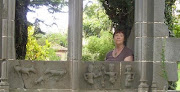
  1. Menorca – ditto last year. The photo above is a view from the northernmost tip of Menorca.
  1. Madeira – ditto the year before.
  1. Poole – where my new home is.
  1. Torquay – where my first home was.
  1. North Dorset – where my last home was.
  1. York – where I recently spent a weekend.

There I think I should stop. As I was writing this, more and more ideas were coming to me. Now, apart from the first two, I just need to work out the angles that might sell and get on with it.

But tomorrow I’m going out to meet a friend I haven’t seen for a couple of years. I’ll be taking the train from my new local station. Must remember to take my camera. Wonder what ideas I’ll come up with during the day.

Friday, 11 September 2009

Sky Cruise in Egypt


When we were in Egypt this spring, one of the excursions on offer was an early morning balloon flight over the Nile and the West Bank at Luxor. Some people who’d done it were raving about it, but it was too expensive for us.

A few weeks after we came home, an item on the news caught my attention. A hot air balloon in Luxor had collided with some overhead cables and come down. A couple of Brits were in it at the time. No-one was badly injured but all the passengers were taken to hospital.

I bet they felt they’d had a lucky escape. I felt that we’d had one too, even though we hadn’t seriously considered taking the ride.

I took the photo of one of these balloons from the safety of the ground.

Tuesday, 8 September 2009

International Literacy Day


Since I have spent part of my working life trying to help adults improve their reading and writing skills, I could not let this day pass without mention.

Often the reason for difficulties in this area is dyslexia, which has only been fully recognised in Britain in recent years. Dyslexia is now something that can be overcome and people can be helped to do so. Sometimes there are other learning difficulties to overcome. Sometimes it is just a question of inherited expectations or lack of encouragement in the traditional years of education. Personality disorders can interfere with learning, and these seem to be becoming more and more prevalent.

Whatever the reason, a lack of literacy skills severely affects quality of life. Where they are able to get help and overcome their difficulties, they are amazed by the doors that open to them and the choices they are able to make. When I was teaching, this was wonderfully demonstrated by Sue Torr, a woman who was touring the country with a short drama based on her life before and after she was able to read.

Everyone who can’t read or write develops coping mechanisms. This woman had successfully hidden her problem from her family and friends, even from her husband, for years. It was only when she was 38 and working as a achool dinner lady that she confided in a teacher, and came to realise that she really could do something about it. She took adult classes and, in time, managed to read and write.

It was such an epiphany for her that she knew she had to spread the word, and she collaborated with a drama group to write and produce her play and take it around the country. Sue has also written a book about her experiences and you can find the details here. Her achievements have been recognised with the award of MBE presented to her by the Queen at Buckingham Palace.

Those of us whose education provided us with the ability to read and write often find it hard to understand what life would be like without this capacity, or how hard it can be for some people to learn. I once took on a government funded project to raise awareness among people whose work put them in touch with less fortunate adults who had missed out on literacy.

I soon realised that one of the most illuminating parts of my course was when I gave out a handout of mirror writing and asked them to read it. Most managed it slowly and with great difficulty; some found it just too hard to do. And they realised just how hard it would be to learn to read from scratch or close to it, and how much determination it would take to stick to it.

To read this post, you must be literate. And just think of the number of ways you need to use your literacy skills in your everyday life. It’s only in recent years that a kind of international language of symbols for signs to warn of hazards has been agreed. How do you know which bus to catch, and when and where? How do you know what platform your train will go from? How do you apply for a job? If you get one as a cleaner, what products are right for what purpose and safe to use without protective clothing? How do you find a plumber when you need one? These questions could go on and on.

We should all be thanking our lucky stars that at some time in our lives, we learned how to read.

Monday, 7 September 2009

Website Hosting

I’ve sometimes thought about leaving blogspot, although it’s really convenient and has made my blogging learning curve almost hassle free. But if I want to do more than blog, I will have to set up my own site and find a good site host.

For anyone looking to do this now, there’s plenty of useful information about website hosting at Web Hosting Geeks. You’ll find recommendations, reviews and ratings on the important aspects of technical support; customer support; software; traffic; reliability and uptime; space, price; quality and user-friendliness. They also categorise each host so you can select from a list of those that really suit you. They even have a Green category. And there is a ‘best for’ list as well in case you are not familiar with their category names and don’t have the time or the nous to scroll down the page and find them all explained.

You can read their own reviews and other customer reviews as well. They seem to leave nothing out.

The site also provides articles that give you plenty of guidance on how to make your selection. The articles are well written and easy to read. Check out this one to see what I mean. I’ve got it bookmarked now for if, and when, I decide to make my change. I’ll definitely be checking it out.

Checking up on Article Thieves


Following my last post, someone asked how to set up a Google Alert, so here’s a guide to how you can check up on article thieves.

Setting up a Google Alert is a simple process, and it’s currently completely free.

It’s best to have a Google account although you can set alerts without having one. With a Google account, you will be given a gmail address and your alerts can be sent there, or to another email address if you prefer.You will also be able to manage and delete your alerts if you no longer need them.

To set up your alerts, go to the Google Alerts welcome page where you will find a box headed Create a Google Alert. Next to Search Terms, copy in a sentence or two of your article – up to 32 words is allowed. I always leave the next option, labelled Type, as comprehensive, and the next one about frequency as once a day, but you have other options to choose from. The last option is for you to select the email address or the feed where you want to receive your alerts.

Finally click on Create Alert and sit back and wait.

There are other ways to check for plagiarism of your work. One is copyscape, which also has a free option, plus a couple of paid ones. The Premium Service costs $0.05 per search and you prepay for a batch of these and are given up to a year to use them. Copysentry is more expensive but automatically searches for anything on your site pages at regular intervals and alerts you in the way that Google Alerts do, the advantage being that it searches for all of your content, rather than just up to 32 words.

Another site you can use is Article Checker, where you can enter a large amount of text to be searched for, and choose searches via Google and Yahoo. This is a free service and useful for individual searches, or for searching on just a few articles in your own time.

Finally, of course, you can use your favourite search engine. I often just put some text into a plain old Google search and have occasionally come up with some unexpected and illuminating results.


Angry pic is from Wikimedia Commons, originally by Kasuga and modified by Soap and Mikael Haggstrom.


Saturday, 5 September 2009

Plagiarism

I've had a couple of problems recently with people who have stolen my work. First I found one of my articles on Menorca here. I have given the link to let you know that the site contains stolen content. Other CC authors have found their work there too. My article was one that I had pulled from Constant Content so that I could submit it elsewhere, so I can't ask CC support to deal with it for me. but I can't seel it to my potential customer either.

The other day I was horrified to receive an email from Helium accusing me of plagiarism because an article I had posted there had been found on another site with a different byline. When I googled a couple of paragraphs I found it on an article ezine. This one had already been purchased from CC for usage rights only. That means it can be published once with my byline and I still retain the copyright. CC are now chasing the buyer to see if that person was responsible and, if so, to request a changed byline, or an upgrade to full rights on payment of the difference in the prices.

I have explained the situation to Helium via their help team, ie, that I am a victim not a perpetrator, and await a response. The pennies I'd earn there from that article are probably not worth bothering about, but I'd really like my reputation to remain intact.

The lesson I've learned from that is to set up google alerts on all my articles from now on, so that I'll most likely find out early if they have been stolen or can check how they appear before posting them anywhere else.

Writing Tip


________________
Add this to your site